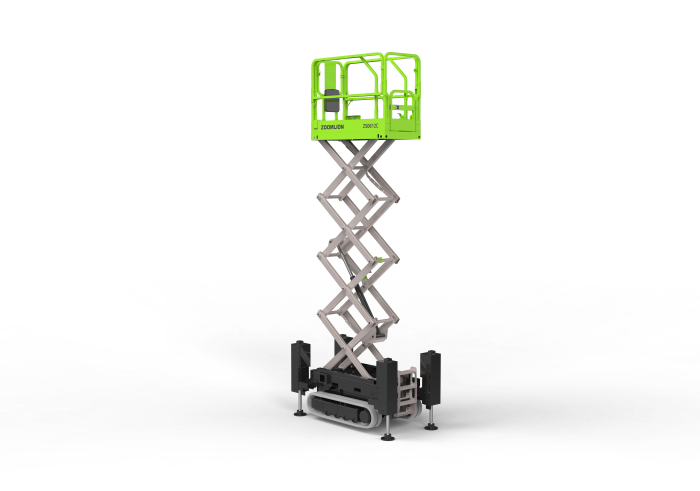
Construction and maintenance projects often involve complex working environments where access conditions change throughout the job cycle. Before selecting aerial equipment, contractors need to evaluate more than lifting height and platform capacity. Machine dimensions, ground contact, and mobility directly influence whether equipment can reach the work area safely and efficiently. For projects involving uneven terrain or restricted access, a crawler scissor lift can provide a practical solution when site planning focuses on stability and maneuverability.
Track width and overall machine size are especially important considerations because they affect transportation, route planning, workspace requirements, and operational flexibility. Understanding these factors helps project managers choose equipment that fits both current tasks and future site conditions.
Why Crawler Scissor Lift Dimensions Influence Site Preparation
Every jobsite has physical limitations. Narrow pathways, uneven surfaces, overhead structures, and temporary access routes can determine whether an aerial work platform is suitable for a specific application. A machine that delivers sufficient working height may still create challenges if it cannot pass through entrances or operate comfortably within the available area.
A crawler scissor lift is designed for applications where stability and terrain adaptability are important. Unlike equipment intended only for smooth indoor floors, tracked scissor lifts are commonly considered for outdoor construction, facility maintenance, landscaping, and industrial projects where ground conditions may vary.
During the planning stage, contractors should measure access points, identify turning areas, and review ground conditions. These checks help avoid delays caused by equipment arriving at the site but being unable to reach the intended working zone.
How Track Width Affects Stability and Mobility
Track width is closely connected with machine stability. A wider footprint can help distribute weight over a larger contact area, which may improve confidence when working on uneven surfaces. However, a wider machine also requires more space for transportation and movement through restricted areas.
For tracked scissor lifts, the relationship between width and mobility requires careful evaluation. A machine must be wide enough to provide stable operation while remaining compact enough to navigate the jobsite. Contractors often need to balance these requirements based on terrain, available space, and project requirements.
In addition, ground pressure is an important consideration. Tracked systems can help spread machine weight across the working surface, making them suitable for certain sensitive or uneven terrains. However, operators must still follow manufacturer guidance and assess whether the surface can safely support the equipment.
Selecting the Right Machine Size for Different Jobsites
Machine size affects almost every stage of equipment deployment, from transportation to daily operation. Compact dimensions may benefit projects with limited access, while larger platforms may provide additional workspace and capacity for demanding applications.
The Zoomlion Access ZS0612C crawler scissor lift demonstrates how machine specifications contribute to equipment selection. It offers a maximum working height of 7.8 m, a maximum platform capacity of 230 kg, and a machine weight of 1,900 kg, based on the provided product information. These specifications help contractors assess whether the equipment meets their working height, load, and access requirements.
The ZS0612C has a platform width of 0.74 m and an overall machine width of 1.15 m. Its extension deck has a rated capacity of 113 kg. These dimensions and load specifications help project planners evaluate access restrictions, available working space, and the load requirements of tasks performed on the extended platform. Contractors should also check the manufacturer’s complete technical specifications, including overall length and transport dimensions, before finalizing their equipment selection.
Planning Transportation and Jobsite Access Routes
Transportation is often overlooked during equipment selection. A machine that performs well on-site must also be practical to deliver, unload, and relocate. Contractors should consider trailer requirements, loading procedures, gate widths, and internal site routes before mobilization.
For the ZS0612C and other tracked scissor lifts, access planning is particularly important because the machine may be required to travel across multiple work areas during a project. With an overall width of 1.15 m, the ZS0612C’s clearance requirements should be compared with the narrowest access points along the planned route. Narrow corridors or temporary roads can limit movement if the equipment dimensions are not reviewed in advance.
Project teams should create a route plan that includes entry points, turning locations, surface conditions, and potential obstacles. This approach reduces unnecessary repositioning and allows operators to use the equipment more effectively throughout different construction phases.
Matching Tracked Scissor Lifts with Terrain Conditions
Terrain conditions are one of the main reasons contractors consider tracked equipment. Construction sites may include loose soil, gravel, slopes, or unfinished surfaces where standard access equipment may not provide the required mobility.
Tracked scissor lifts can support operations by combining lifting capability with improved travel characteristics for challenging environments. However, equipment selection should always consider factors such as slope limitations, weather conditions, load requirements, and operator training.
The Zoomlion Access ZS0612C is a crawler scissor lift that provides another option for working at height across rough and unstable terrain. The machine is CE certified, according to the provided product information. Contractors should compare its complete technical specifications with actual site conditions and application requirements rather than relying only on general equipment categories.
Building Better Access Strategies for Challenging Projects
Successful aerial work planning depends on matching equipment characteristics with jobsite requirements. Track width and machine size are not simply measurement details; they influence stability, transportation, access, and daily productivity.
As construction environments become more complex, contractors increasingly need equipment that balances reach with adaptability. By evaluating a crawler scissor lift through detailed site planning and specification comparison, project teams can select solutions that better support efficient operations. For companies considering Zoomlion Access equipment, understanding these factors can help create a more practical and reliable access strategy.
