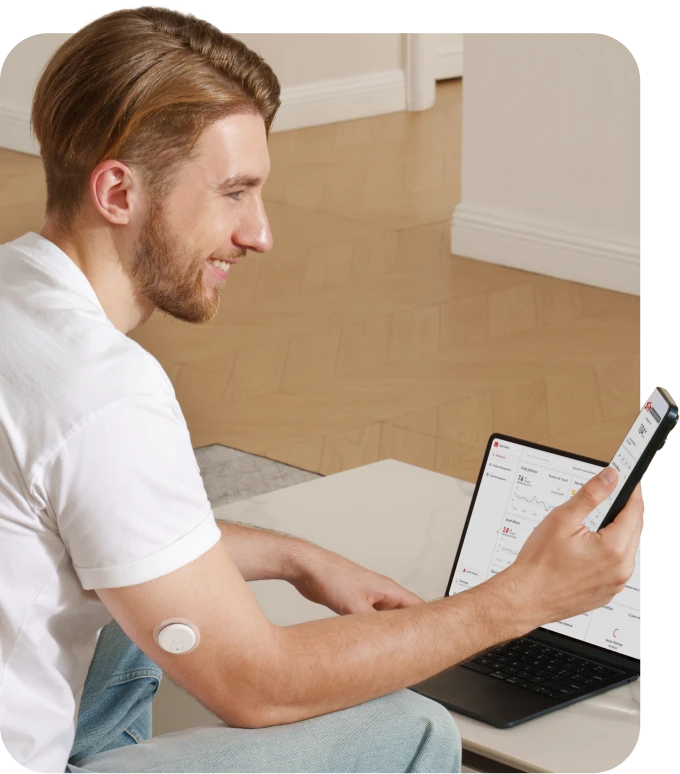
Continuous glucose monitoring (CGM) can show glucose patterns throughout the day, but the quality of each reading depends on both the sensor itself and the conditions around its use. Understanding these influences helps users interpret trends appropriately and avoid preventable sources of variation.
Sensor Placement and Wear Conditions
A CGM sensor measures glucose in interstitial fluid rather than directly sampling blood. Because of this, sensor placement, adhesion, and application conditions can affect the quality of the data it collects. The skin should be clean, dry, and suitable for the device’s approved wear location. Excessive moisture, poor adhesion, accidental displacement, or repeated pressure on the sensor may interfere with stable measurements.
Physical activity can also matter. Exercise may cause sweating, body movement, and changes in circulation, while contact with clothing or equipment can place mechanical stress on the sensor. Sensor displacement can affect sensor stability and may contribute to unreliable readings during the intended wear period.
Why Glucose Readings Can Lag Behind Blood Glucose
One important concept when evaluating CGM sensor accuracy is the difference between blood glucose and interstitial glucose. When glucose is rising or falling quickly, interstitial glucose may change slightly later than blood glucose. This does not necessarily mean that the sensor is malfunctioning. It is a physiological difference related to where the measurement is taken.
For this reason, trend arrows and direction of change can provide useful context alongside an individual glucose reading. A rapidly changing glucose level may produce a temporary difference between a CGM reading and a fingerstick measurement. When symptoms do not match the CGM result, users should follow the device’s safety instructions and use a blood glucose test when required for treatment decisions.
Temperature, Pressure, and Daily Activities
Environmental and physical conditions can create another layer of variation. Temperature extremes may affect electronic devices or the behavior of a sensing system, depending on the product. Water exposure, pressure on the sensor while sleeping, and vigorous movement are also worth considering.
This is particularly relevant at night. Lying directly on a sensor can temporarily affect readings in some situations when the sensor is subjected to sustained pressure. Users who notice an unexpectedly low reading should consider whether there is a clear explanation, such as sleeping on the sensor, before interpreting one isolated value as a broader glucose trend.
Sensor Technology and Measurement Performance
The design of the sensing system is a major factor in accuracy. Sensor chemistry, manufacturing consistency, signal processing, algorithms, and quality control all influence how effectively the system converts a biological signal into a glucose reading.
MARD, or mean absolute relative difference, is one commonly reported statistical measure used to assess CGM performance. Lower MARD values generally indicate a smaller average relative difference between CGM readings and the reference measurements used in the study, although MARD should not be treated as the only indicator of real-world performance. Study design, participant population, glucose ranges, and testing conditions also matter.
For users comparing devices, looking beyond a single performance figure can provide a broader understanding of the system. Wear duration, reading frequency, alert functions, connectivity, sensor size, and instructions for handling unexpected readings can all affect how practical a CGM is for everyday use.
How Continuous Data Improves Glucose Trend Analysis
Modern CGM systems do more than capture individual measurements. Software can organize readings into trend graphs, alerts, reports, and other visual summaries. Algorithms may also help process incoming sensor signals. These features do not change the underlying biological measurement, but they can make patterns easier to recognize.
The iCan CGM system, for example, is designed around continuous monitoring and app-based trend viewing. The iCan i3 is designed to provide glucose readings every three minutes over a 15-day wear period. It also supports real-time glucose monitoring, customizable high and low glucose alerts, event logging, and glucose reports. The sensor has an IP28 ingress protection rating, with water-resistance conditions specified in the product instructions.
Another practical feature is that continuous monitoring can provide glucose information without requiring a fingerstick for every routine reading, subject to the device’ instructions. This can make long-term glucose tracking less disruptive while allowing users to see how glucose changes across meals, exercise, rest, and other daily activities.
User Technique Still Matters
Even advanced sensors depend on correct use. Applying the sensor according to the instructions, keeping the site clean and dry, protecting the device from unnecessary pressure, and responding appropriately to alerts all support more reliable monitoring.
It is also important not to confuse a single unexpected reading with a problem affecting the entire monitoring period. A user may see a temporary discrepancy during rapid glucose changes, after pressure is applied to the sensor, or when conditions around the device change. Looking at repeated patterns can provide more useful context than focusing on one isolated number.
Sinocare has developed its CGM products around biosensing technology, digital connectivity, and practical daily glucose management. The company also integrates data visualization and app-based tools into its wearable monitoring approach, helping turn frequent glucose measurements into information that can be reviewed over time.
Turning Sensor Data into Practical Insight
Several factors can influence CGM readings, including sensor placement, physiological lag, pressure, environmental conditions, sensing technology, data processing, and user technique. The most useful approach is therefore to consider the entire monitoring process rather than assuming that every unexpected value reflects a problem with the sensor itself.
Understanding how CGM technology behaves in everyday situations can make glucose data easier to interpret. Sinocare’s iCan system combines frequent data collection with trend analysis and alerts, while the iCan i3 provides 15 days of wear and three-minute monitoring intervals. Recognizing these factors can help users interpret unexpected readings in the context of the device instructions and seek professional advice when appropriate.
