Choosing computing hardware for a medical device involves more than processor speed or a compact enclosure. Healthcare OEMs must consider electrical safety, reliability, supply continuity, integration effort, and the quality systems behind development and manufacturing. ISO 13485 is an important part of this evaluation, but it should not be mistaken for a certification of every individual computer. Buyers need to assess both the hardware and the evidence supporting its intended use.
Understand What ISO 13485 Actually Certifies
ISO 13485 defines quality management system requirements for organizations involved in medical device design, production, installation, and servicing. It helps establish controlled processes for documentation, traceability, risk management, corrective action, and consistent delivery. The standard is therefore relevant when evaluating a supplier, but the scope of its certificate matters.
An OEM should check the legal entity named on the certificate, the covered sites, the activities included, and the certificate’s validity. A supplier’s general statement that it works with medical customers does not prove that its manufacturing operations are certified. Equally, an ISO 13485 certificate does not automatically mean that a computer is approved for every clinical environment or that a finished medical device meets all applicable regulations.
Match Computing Performance to the Clinical Workload
Start with the application. Patient monitoring, laboratory analyzers, medical imaging, and AI-assisted diagnostics place different demands on computing hardware. A system used to aggregate sensor data may prioritize low power consumption and stable I/O. Imaging or AI workloads may need higher CPU performance, multiple display outputs, fast storage, or room for an accelerator.
A suitable medical-grade PC should be evaluated against measurable workload requirements rather than broad performance claims. Confirm processor options, memory capacity, storage expansion, display resolution, network interfaces, USB ports, serial connections, and support for required operating systems. Also check what happens under sustained workloads: thermal limits, fan behavior, and service access may affect the final enclosure design.
Compute capability should leave enough headroom for software updates and future features without adding unnecessary cost or heat. OEMs should test their actual applications and peripherals before freezing a hardware configuration.
Verify Safety, EMC, and Environmental Requirements
The system’s intended use determines which standards and regulations apply. Medical electrical equipment may require evaluation against relevant IEC 60601 requirements, while electromagnetic compatibility is essential where the computer operates near sensitive devices. The exact compliance pathway depends on the complete product, its accessories, power supply, installation, and target market.
Do not rely on a generic “medical grade” label alone. Request the applicable declarations, test reports, certification details, and configuration covered by the evidence. Check whether changes to a power adapter, display, enclosure, cable, or expansion card could affect compliance. A component’s certification cannot automatically be transferred to the finished device.
Reliability also depends on practical factors, including operating temperature, airflow, vibration, dust protection, cleaning procedures, and the placement of connectors. These requirements vary between a hospital cart, a laboratory instrument, and fixed diagnostic equipment.
Review Quality Controls and Supplier Documentation
OEMs evaluating ISO13485 certified companies should look beyond the presence of a certificate. Ask how engineering changes are controlled, how nonconforming parts are handled, how suppliers are qualified, and how issues are recorded and corrected. Request clear documentation for the supplied hardware revision and define how the vendor will notify customers of component substitutions or end-of-life decisions.
Traceability is important when a field problem needs investigation. Part numbers, revision history, test records, and agreed change-notification procedures help engineering teams establish which configurations are affected. The contract should also clarify responsibilities for warranty support, failure analysis, replacement stock, and long-term availability.
A well-documented supplier relationship reduces uncertainty during verification and later production changes. It does not remove the OEM’s responsibility to assess the complete medical device, but it makes that work more manageable.
Plan for Integration and Long-Term Support
Hardware integration can consume significant development time if drivers, firmware, operating-system images, or peripheral interfaces are poorly documented. Before selecting a platform, request access to datasheets, BIOS or firmware information, SDKs, BSP packages, device drivers, and technical support contacts. Confirm which operating-system versions are supported and how security updates will be handled.
The medical device lifecycle often extends beyond a standard consumer-computing refresh cycle. Procurement teams should discuss product availability, component changes, repair options, and expected support periods early. A lower purchase price may offer little value if a redesign becomes necessary because a key component disappears.
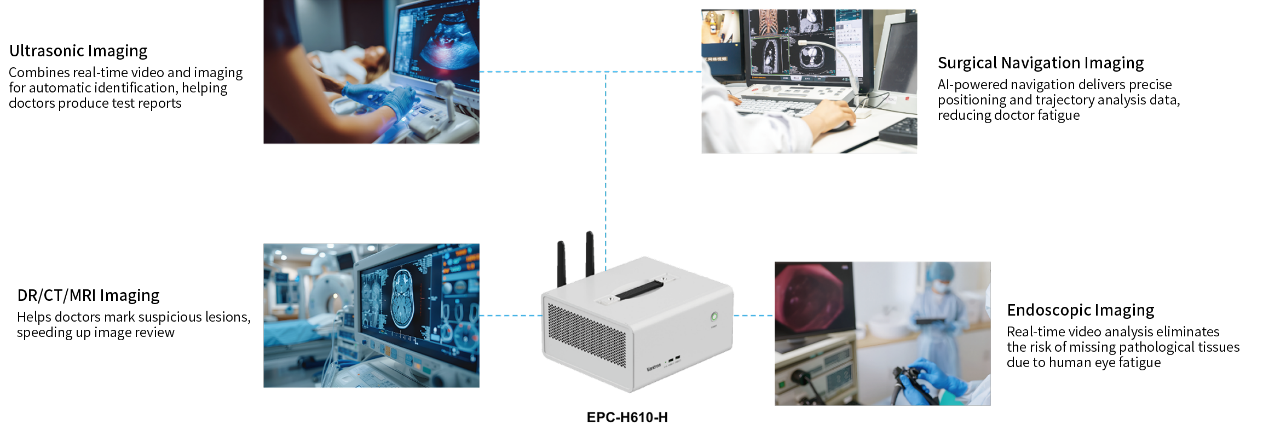
Vantron’s published healthcare portfolio includes embedded computing platforms and medical-oriented systems such as the EPC-H610-H medical AI box PC. Its listed features include support for multiple independent displays, expandable memory and storage, and PCIe expansion for an additional accelerator. OEM teams should still verify the current configuration, the relevant compliance documents, and suitability for their specific application.
For connected systems, ask Vantron and other suppliers about secure boot, access control, signed updates, logging, and vulnerability response. Assign clear ownership for security advisories and patches throughout support.
Evaluate the Whole System Before Making a Decision
A reliable medical computing choice balances quality-system evidence, performance, safety, integration, and lifecycle support. Compare suppliers against the same requirements and keep records of certificates, test evidence, configuration details, and open risks. Avoid treating any single label as a substitute for technical review.
For healthcare OEMs considering an embedded platform partner, Vantron is one option to assess alongside other suppliers. The best fit is the platform that meets the device’s validated requirements, supports a controlled development process, and can be maintained throughout the planned product lifecycle.
