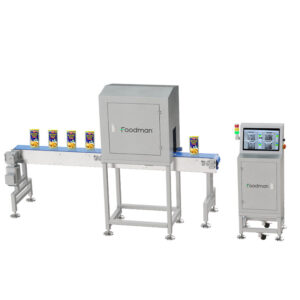
Food products can appear flawless on the outside while concealing dense foreign materials beneath the package surface. Glass fragments and stones are particularly difficult to assess through ordinary visual checks, especially once products have been sealed. X-Ray food inspection provides another layer of examination by analyzing differences in material density inside packaged goods. This approach is increasingly relevant to manufacturers handling processed foods, where packaging, production speed, and product variety can make manual inspection difficult.
Foodman Vision uses this approach in wider quality control. It combines industrial cameras with AI-based analysis. These systems perform online checks for sealing and coding. Different inspection technologies can support each other. They do not rely on a single checkpoint.
Why Glass And Stone Require Careful Detection
Glass contamination may originate from damaged containers, processing equipment, or handling incidents. Because transparent fragments can blend into many food products, visual inspection has obvious limitations. Their relatively high density, however, creates a detectable contrast during X-Ray imaging.
Stone presents a different challenge. Raw vegetables, grains, nuts, and other agricultural ingredients may carry small pieces of soil, gravel, or mineral material into processing facilities. Washing and sorting can reduce this risk, yet some dense particles may remain hidden within the product flow.
The physical properties of the contaminant matter considerably. Detection depends on density differences between the foreign material and surrounding food, as well as particle size, product thickness, packaging, and inspection conditions. Understanding these variables helps quality teams set realistic inspection criteria.
How X-Ray Imaging Identifies Dense Contaminants
X-Ray systems work by passing radiation through the product toward a detector. Materials absorb X-Rays at different rates, so the resulting image contains variations that can reveal objects with significantly different density from the food around them.
Unlike ordinary cameras, the technology does not depend on visible light or a clear package surface. Sealed cartons, trays, pouches, cans, and other formats can therefore be examined without opening the finished product.
Image processing plays an important role in interpreting these differences. Detection software evaluates the captured image against configured thresholds and product conditions. Factors such as conveyor speed, product positioning, package dimensions, and background density can influence the final inspection result.
Detecting glass and stone also depends on the physical form of the contaminant. Glass may break into fragments of different sizes and shapes, while stones can vary from small, rounded grains to irregular, dense pieces. Two glass particles of the same material may produce different image signatures if one is flat and another is angled. Similarly, a dense stone may be easier to detect than a porous one of similar size.
Because of this variability, system performance should be validated with representative samples rather than a single test piece. Processors can prepare samples containing glass and stone fragments of known sizes, then run them through the inspection system at normal line speed. This reveals the smallest detectable fragment under realistic conditions.
Where Inspection Fits Into Food Production
Placement within the production line should reflect the point at which contamination risk is most meaningful. Raw ingredients may require one type of control, while finished packaged products may benefit from another inspection stage after sealing.
Packaging itself can affect imaging conditions. Thick materials or complex package structures may change the background seen by the detector, making product-specific testing necessary. Different food categories may also require different settings because their internal densities are not alike.
Beyond Foreign Material Detection
Foreign-material detection is only part of the potential value of automated inspection. Depending on system capabilities and product characteristics, X-Ray technology may also identify issues involving missing or misplaced components, abnormal product density, or certain packaging inconsistencies.
X-Ray food inspection can be particularly useful on high-throughput lines because products can pass through the inspection point without being individually opened or handled. Automated rejection mechanisms may then separate packages that meet configured alarm conditions for additional assessment.
Interpretation of inspection results deserves attention as well. A recurring pattern of detections could indicate problems upstream, such as damaged processing components or changes in incoming raw materials. Reviewing those patterns may help quality personnel investigate the underlying process rather than treating each rejected package as an isolated event.
Coordinating Different Inspection Technologies
Food factories rarely depend on one form of automated checking. X-Ray systems address density-related concerns, while cameras can examine visible characteristics such as labels, codes, seals, and surface defects. Combining these capabilities can provide broader coverage across different stages of production.
The Foodman vision inspection system, for example, uses sensitive industrial cameras and AI algorithms to perform 360° online checks of product sealing and coding. Its role differs from X-Ray inspection, but the two technologies can complement each other when a production line requires both internal and external quality checks.
Turning Inspection Data Into Better Decisions
Glass and stone contamination require particular attention because neither hazard is necessarily obvious from the outside. X-Ray food inspection gives manufacturers a way to examine internal density patterns without opening sealed packages. Complementary tools can address visible packaging defects, but X-Ray inspection remains central to detecting dense contaminants.
Used within a broader quality framework, the approach can add meaningful inspection coverage. Foodman Vision applies this X-Ray inspection approach to help manufacturers address glass and stone detection alongside other quality-control measures.
