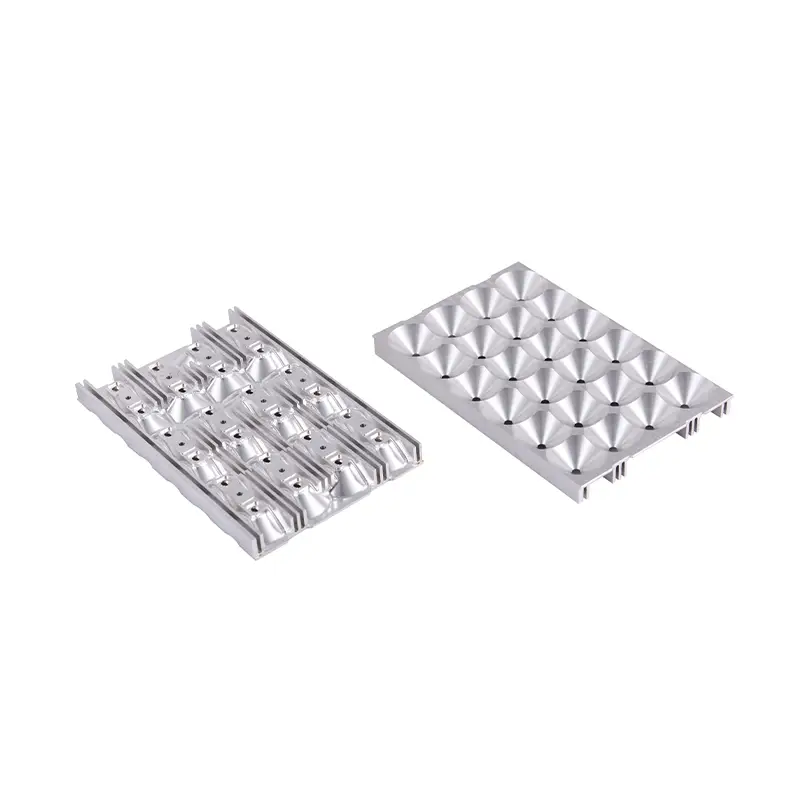
A functional prototype needs to do more than resemble the final product. It should demonstrate how the part performs under realistic conditions, whether its dimensions meet engineering requirements, and whether the selected material can withstand the intended application. Choosing the right metal and plastic rapid prototyping services therefore requires more than comparing lead times and prices.
The right process should reflect the part’s function, strength requirements, operating temperature, dimensional accuracy, material requirements, prototype quantity, and future production plans. With these factors considered together, manufacturers can reduce design uncertainty and make better decisions before committing to production tooling.
Start With the Part’s Functional Requirements
The first question is not whether metal or plastic is cheaper. It is what the prototype needs to prove.
A housing may require accurate assembly dimensions and sufficient impact resistance, while a mechanical bracket may need higher structural strength. A component exposed to heat, chemicals, friction, or repeated loading requires a material and manufacturing process capable of reproducing those conditions.
For functional testing, CNC machining can be suitable when engineers need prototypes made directly from engineering-grade materials. HordRT provides CNC machining for both metal and plastic parts, with milling, turning, EDM, wire cutting, and other machining capabilities available for different geometries and requirements.
For more complex geometries, industrial 3D printing can provide another route. HordRT offers technologies including SLA, SLS, FDM, and SLM, covering both plastic and metal applications.
Match Material to Strength and Temperature
Material selection directly affects the value of a prototype. Using a visually similar material that behaves differently under load or heat can produce misleading test results.
Metal prototypes may be appropriate for structural components, heat-sensitive applications, fixtures, and parts requiring high mechanical performance. Depending on the application, available materials include aluminum, stainless steel, steel, and titanium alloys.
Plastic prototypes can be produced from materials such as ABS, nylon, HDPE, PP, PEEK, PTFE, and other engineering plastics. HordRT maintains a broad material portfolio across CNC machining, 3D printing, sheet metal fabrication, injection molding, and other manufacturing processes.
The objective is not simply to choose a material that looks like the final component. The prototype should provide meaningful information about the product’s expected performance.
Consider Dimensional Accuracy and Surface Requirements
A prototype may pass a visual inspection but fail during assembly because a mounting hole, wall thickness, mating surface, or critical tolerance is incorrect.
For this reason, dimensional accuracy should be discussed before production rather than checked only after parts arrive. HordRT states that standard CNC dimensions can typically be controlled to around ±0.005″, while selected critical features may reach ±0.001″ subject to engineering review.
Surface finishing should also correspond to the purpose of the prototype. A presentation model may prioritize appearance, while a functional component may require smooth contact surfaces, accurate sealing areas, or a specific coating. HordRT can combine manufacturing processes and secondary operations to address different prototype requirements.
Select the Process According to Prototype Quantity
Quantity can significantly influence the most practical rapid prototyping process.
For one or several highly customized components, CNC machining or 3D printing can avoid dedicated tooling and allow design changes to be introduced quickly. For more complex plastic parts requiring representative molded samples, prototype tooling and injection molding can provide a closer connection to future production.
HordRT supports rapid tooling, injection molding, CNC machining, die casting, sheet metal fabrication, and 3D printing within its manufacturing capabilities. This broader process range allows the prototype strategy to be adjusted according to geometry, material, quantity, and testing objectives rather than forcing every project into the same manufacturing route.
Think About the Next Production Stage
A prototype should not be treated as an isolated sample. The manufacturing method selected today can influence the transition to future production.
If injection molding is expected later, prototype tooling can help validate parting lines, gates, ejection, wall thickness, tolerances, and potential molding issues before production tooling is finalized. HordRT provides DFM analysis covering these considerations and supports prototype tooling, mold trials, inspection, and subsequent production processes.
This approach can make engineering feedback more useful because prototype results are connected to manufacturability rather than evaluated only from a design perspective.
Why HordRT for Metal and Plastic Prototypes?
HordRT combines rapid prototyping with broader manufacturing capabilities, giving engineering teams more flexibility when selecting a process. The company states that it can provide rapid prototypes in as fast as one day, offers no minimum order quantity, and provides preliminary DFM analysis with inquiries. Its quality system includes ISO 9001 and IATF 16949 certification, with quality inspections throughout production.
The combination of metal and plastic materials, CNC machining, 3D printing, rapid tooling, injection molding, and sheet metal fabrication also creates a practical path from initial prototype to production-ready parts.
For projects where speed, material authenticity, dimensional control, and future manufacturability all matter, this integrated approach can reduce unnecessary process changes during development.
Turn Prototype Testing Into Better Production Decisions
Choosing metal and plastic rapid prototyping services should begin with what the prototype needs to prove. Strength, temperature resistance, dimensional accuracy, material behavior, quantity, and future production requirements all influence the right manufacturing process.
With multiple manufacturing technologies, engineering support, DFM analysis, material options, and quality controls, HordRT provides a flexible route for developing and validating functional parts. A well-planned prototype is not simply an early version of a product. It is a practical engineering step that helps identify problems earlier, refine the design, and prepare the part for the next stage of manufacturing.
